A small warning before consuming. This journal or essay or whatever suits the classification best contains what I can only assume is semi if not rather offensive takes on the LGBT+. If you read the entirety of it, you’ll see that’s not my aim, but I get that intention only goes so far. As well, there are mentions of self-harm, suicide, trauma, and possible remarks that may come across as sexist. If anything like that perturbs you or unsettles you, I’d stop reading now. If not, enjoy, I think? This isn’t exactly a joyful topic but something that is rather frustrating to me personally, and I needed some sort of outlet for it. My apologies.
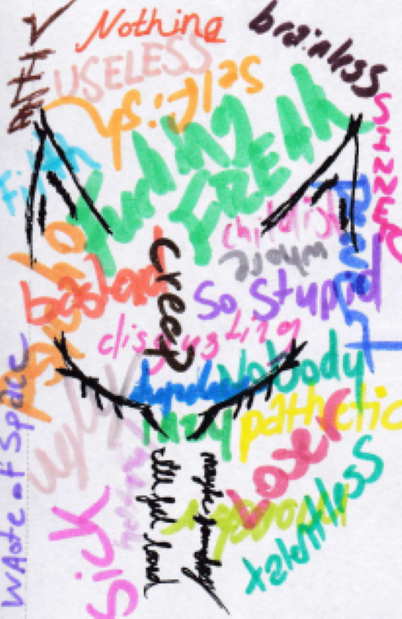
Sorry for the vent rant. I’ll say that first and foremost because it really is that, just something I needed to hammer out of my head in place of therapy.
I’m not a big fan of June. June is a month littered with a lot of different bad times and memories for me. It’s the kick-off to summer, which as a kid, meant my already anti-social behavior was allowed to grow worse and deepen the depression I have suffered since I was young. June is the month of my ex’s birthday, which is ingrained into my head because I was always told that I wasn’t doing enough to make them happy. We also were married briefly, and the wedding was later in the month. But those things aside, and trust me, there’s plenty more I can list; I don’t like June because of Pride.
Now, I know how that reads. I’m not dumb, and I get that saying you don’t like Pride or that you think every company putting up a rainbow flag for the month is idiotic and pandering comes across as hateful. Probably, deep down, somewhere well cloaked in my subconscious, I am hateful, but as I go through my mind, I’d like to believe I’m not. It’s not the people or their inclinations that I hate about Pride but the many ways in which the real issues of being outside of orthodoxy in society are trivialized by Pride and those people most vehement about its importance.
I could break down, right now, all the various groups of the LGBT…., but it’s not about a particular group or even particular people. This is an issue of acceptance that has gone too far of field to any longer be helpful to the people it insists it serves. I can’t imagine what it would be like to be a teen or even a young kid confused about their identity or sexuality now. When Pride became a huge thing, I was already in my twenties, and though I was no less confused then, I feel like I was less susceptible to advice that might otherwise have put me in a worse place.
A bit of background, I certainly owe, and it’s needed before I go further. I grew into being sexually aware, becoming aroused and viewing sexually explicit things when I was very young. This isn’t a trauma rant, and I hate mentioning this because it absolutely sounds too strange to be real for most people, but I was about ten when I began regularly looking up pornography on the internet. Now at that time, it was not a supported thing to be young and unsure of your sexuality, let alone reasonably sure you might be gay or bisexual. Day in, day out, as private as I kept the thoughts and desires I had, the content I viewed secret, I found myself constantly being called various things from sissy to faggot and, you know, jokes about having supposed to be born a girl. I don’t feel anything for those times now, but I know a lot of people would say I had a hard time of things. It certainly would have been nice to have someone say it’s okay, don’t be ashamed of who you are, but as I said, I think we’ve gone past the point of it being helpful and being now destructive.
Let’s jump to my mid-twenties. This was only a few years ago. Transgender people became a hot-button issue more so than they ever had in the past. In the past, especially if you’ve watched even mid-2000s raunchy comedies, transgender people were only mentioned as the butt of a joke. It was empowering to see we as a society had come so far that if someone no longer wanted to be identified as their birth gender, plenty of people were willing to support them. However, I think that support became less of an aid and more of a scapegoat.
I was wrestling with a lot of myself at that time. I have kids and didn’t know if being openly gay would make it harder for them. I still lived in my hometown, and I knew, being that it is a pretty quiet and closed community, that it would be a problem. Moreover, I was sure how things would go with my ex-wife if I were openly gay. At the time, she was vehement that anyone gay or bisexual or what have you was a bad person, only to come out as bi years later. But more painful of a struggle than my sexuality was my gender.
Seeing all this affirmation for people who had come out as trans and seeing how these people became like idols made me feel hope. I had been raising my two girls all alone for years at that point and saw myself as mom and dad. I felt like, maybe, if so many people could come out as trans, perhaps I was too. Part of me thinks it was how society handled these people, either raising them up to much esteem in the world or in the dating world, which I was still in at the time, raising them up to be in a choosing position rather than begging like myself. The more I worked this over in my head, the more I was confident that I should transition, but then I thought, with how rough things had been, it would be detrimental to my children to adjust to such a change. Not that they wouldn’t be okay with it or it would be harmful to them, it simply was that they were at such an age and so much had happened already in their lives that it seemed like extra weight.
Fast-forward to this year. I’ve been experimenting with meditation and some different substances and found the key to that emotion that drove me to believe I should change myself to fit my feelings. It was a very bizarre thing to try to put into words. Still, the best I could describe it is as the animous and anima of Jungian psychology coming together and synthesizing into a divine hermaphrodite of sorts. By this, I mean finding balance and unity within my mindscape to the point that if and when I can put myself in that state of mind, I feel free, limitless, and lucid.
This is branching a bit away from the whole ‘I hate June’ business but placate me a second, please. I believe that this state of mind is what so many are struggling with, and rather than coming to terms with themselves and understanding what is provoking these emotions within them, they are instead going about things in a purely physical fashion. I know spirituality has run thin in the West, and to suggest some element of the divine meets mockery, but I have sincere belief the conscious self in this day and age needs to reckon within itself how it construes its actions outside of what society insists are correct modes of existence. Hardly will I insist that I’m right and perhaps am missing pieces, but I have sincere hope that if people took this time to accept that certain behaviors that fit into a gender-role stereotype are acceptable to be manifest within themselves despite not belonging to that group, so many people will be more content in general and would be more willing to accept themselves as well as others.
We’re looping back now. I mention gender-role stereotypes and for a good reason. As I said before, I’ve played the dating game for years. Being bisexual opens up that pool of candidates for partners, but most certainly homes in on an area seemingly no one wants to talk about, transgender prostitutes. Now I’m not going to argue the “sex work is real work” logic or the opposite, but I will say that the overabundance of transitioning people who look only to have flings wherein they are selling their flesh convinces me that there are people doing this for the wrong reason. These people, I would say, are acting out of only physical concern instead of concern for their emotional well-being or psychological health. This isn’t to say that no people are transitioning who aren’t sincere, but I instead insist that the numbers of genuine patience with gender dysphoria are likely lower, and the large portion is a collection of men who see women’s role in society as a sex object and decide to mimic this impression, therefore, making it more simple for them to find lovers whereas being a gay or bisexual male may run into a standard of appearance rarely talked about in the West.
I’ll touch briefly on this as I plan to write up a complete essay about the subject, but we have shifted the standard of beauty in the world in an odd way. I’m not a proponent that anyone needs to look a specific way to be beautiful. Everyone in the world, you, me, them, has something beautiful about them. This mindset is well and good to have, but it seems we have only applied it to one-half of the population, that of women. You can think of all the ads for lotions and razors that show women of all sizes and shapes, and so on, being told they’re beautiful no matter what. I agree, but what about men. Look at a commercial for Schick or Old Spice, and you see what? A taller fellow, slim if not buff, with good hair, good facial hair, nice skin, really male model material or A-lister. There is no support for men’s beauty beyond a standard and not to get down another rabbit hole but a standard that is prejudiced of race and ethnicity and all manners of physical differences. So it might be easy to see, with that context, why a man below a certain height or with a particular build might find it easier to transition than try to hook with the bait he’s got.
Now transgender people aren’t the only people I think are being made a trivial matter due to this overabundance of tolerance. There are countless categories added to the LGBT index every year, it seems, and every last one is more specific and redundant, self-defeating, and conflicting than the last. As it is, it is terribly hard for so many people to establish and come to terms with their sexuality and gender, but these people, with their new groups and names and flags, make it harder every day for others who associate closer to a standard norm like homosexuality, to understand themselves. What it boils down to, for me, is much the fair-weather Christian stereotype, the family that comes on Easter and Christmas or for weddings and funerals but not regularly to church. These people are out to be seen, but not necessarily because they’ve overcome so much and are proud, but because they’ve affixed a new title to what they are and have
taken it up as personality rather than a small aspect of themselves.
This once again sounds hateful and bigoted, I’m sure, but when we have people out there saying their demi-sexual otherkin trans-racial ABDL sex workers, it becomes a little more clear which people in the LGBT are out there wanting to be proud of themselves and those who are looking for attention. I like to not assume things, though usually, I lean towards people meaning well if nothing else. I feel that most people who do bad things don’t mean to hurt or destroy but intend to do something good; however, so many of these extra groups that make up the plus to the LGBT are, in my eyes, just looking for attention. And what’s worse, we find that people are willing to support these attention seekers because they want to feel compassionate and believe that these people are sincere and are struggling. The real shame is the people who are forgotten because they aren’t flashy and showy and bring out new flags to be spotted as a trending group, suffer.
As I understand Pride, it’s not about who can get the most attention and admiration from social media and such, but to celebrate how far we’ve come. It’s there to be a reminder that even though you face adversity or have or still might in the future, you are still a person and deserve love and deserve to be happy with yourself. The big pull from these extra groups is that they’re there making themselves feel and look unique at the expense of others. There are people who feel unwelcome in the affairs of this group they would belong to because of people who don’t seem to care. Moreover, if you’re not as showy and in your face as so many of these extremely specific groups, which truly could better be placed as just aspects of a minor sub-genre’s personalities, you might as well not be any of the above. The people who don’t put their sexuality first, don’t have rainbow shirts or necklaces with male symbols intertwined, the people who aren’t bedecked in sex toys or wearing a choker that says ‘Cum Slut’ are treated almost as though they shouldn’t be proud, that being gay or bi or a lesbian is easy now just because other groups have come into fashion, but that’s just what it is fashion.
The LGBT+ is, to me, just a fashion statement. Companies display rainbow logos to try to say to the kids, “Look, we’re hip. Ignore that our donations to the LGBT+ are actually minimal because we’ve portioned a million dollars over a five-year span (ala T-Mobile). And don’t bring up the child labor accusations we faced a month ago. We hire trans people; we must be on the level.” What that acronym means is less and less substantial by the day and with the addition of more letters. This isn’t a quantity over quality issue. This is an issue of people who have struggled with who they are because they’re told it’s not okay, it’s not correct, it’s sick, you’re a freak, and so on. What I see in so many of these people with their very unnecessary terms that they hashtag on social media is what I saw in a classmate in high school, insincerity.
This example isn’t great, but it’s serviceable. I had a friend, let’s say his name is Jon. Jon and I are friends in the sense that we have similar interests and similar experiences. Jon and I bonded over a history of self-harm, substance abuse, and suicide attempts to name a few. Jon and I had a mutual friend; let’s say his name is Todd. Todd couldn’t bond over a lot of what Jon and I did. He grew up with not wealth but security in money and parents that were supportive as well as a steady enough life to have a decent circle of friends. But Todd wanted to belong or wanted to be like us, I’m not sure, and I don’t want to cast stones when the guy was a teen and didn’t know any better.
Well, Jon went through a rough patch, and Todd sidled up to him and worked to cut me out. I was bummed, but that wasn’t the problem. Jon tried to overdose and was sent to the hospital and then a psychiatric hospital so he might recover. The following week Todd also “attempted” suicide. The details were what sunk him. He had cut his arm just below the shoulder, not deep, not wide, not multiple times, nothing that couldn’t have been written off as bumping against an edge or getting scratched by a cat. He begged his father to take him to a clinic, and he was out of school for a while. When the details were passed around, we assumed he just wanted time off from school, but when he came back before Jon, it wasn’t so. He bragged about being in an “asylum” and having hallucinations and a girlfriend there that was older and all the kind of things kids say to make themselves seem cool. Jon didn’t come back to our school that year; he came back the following year and worked his ass off to get back to where he was with his GPA knowing home life would be worse if his grades didn’t rebound. To me, all the people in the limelight for Pride are Todds and all the people that actually need that boost, need that shoulder to cry on, need just someone to say, “It’s okay. To be yourself is all that you can do, and that’s enough,” are Jons.
Now, just like with the real Todd, I want to explain that I’m not without my compassion for these people. All this sounds like I don’t like these people and that I think they aren’t valid, which isn’t correct. The issue I take is that all these flags and extra groups are just that, extra. Most of these people would do better just to accept that they likely fit just find into one of the existing groups if they needed a group to belong to at all. Really what I see is a grapple with identity. A lot of these people lack much identity or don’t know how they could fit into this world with how they identify, so it’s easier to fabricate a group to keep them strong and wear a new flag badge because it advertises who they are immediately to any onlooker but only give that little glimpse. Sexuality and gender aren’t things to be defined by, and the LGBT+ should be the most prominent advocates for that notion. Yet, here we are with so many millennials and zoomers insisting that they need more separations and definitions to be themselves when they were already themselves when they woke up that morning.
I guess, heart-to-heart, if anyone who thinks they need those terms ever were to read this, I’d like them to know that you’re not alone.
I’ve felt removed from the world for a long time. In recent years I have found my way of life, who I am, and how I identify become more and more like what an alien might if forced to comingle among humanity. It’s not easy. Life isn’t much easier for others who aren’t gay or intersex or what have you. What, in truth, we need is less division and a base level of unity that should serve as an answer to any other form of systemic hatred. At the end of the day, we’re all just people. We’re all scared and just winging it, hoping for the best. If you like your own sex, if you like the opposite sex, if you want to be some merge between the two, it doesn’t matter, as long as you don’t forget you’re an individual and so is everyone else and just like you everyone else deserve love and attention and recognition. Life is hard enough with everything else we face, from war to environmental catastrophe and world hunger. Hating someone for who they are is no different than raising one group over another without a single concession for anyone else, so why do it? When it’s all said and done, it’s crucial that you are okay with yourself and to hell with what anyone else says. You are not here just to be the apple of everyone’s eye or be the brightest spark in the room. You’ll find a place for yourself in this world if you can be genuine and where that might not be a glamorous place or somewhere you thought you’d end up; it might not be a place where you have a collection of friends or family that support you, it’s simply too important to be yourself and accept who you are without the labels and affectations without the groups and without the flags. Like so many other movements, this one too has been polluted with disingenuine people, but do your best to live as who you are, not who they expect.
 Trazor
Leave a comment